
Jonnie
Memories of a spellbound season

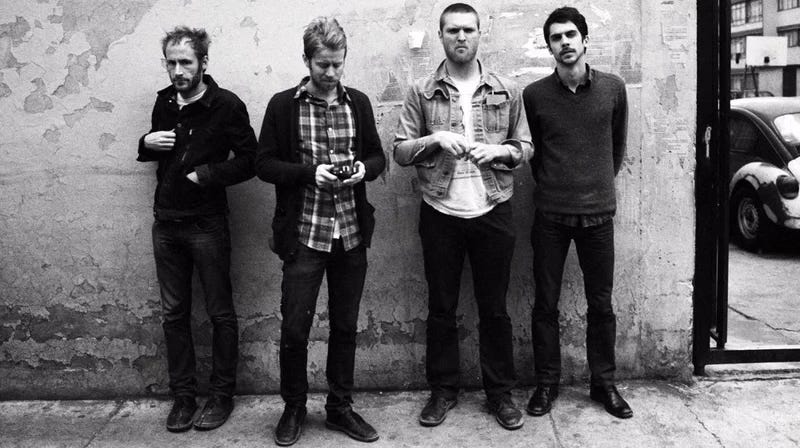
During my senior year of college I became mesmerized by a guy named Jonnie Russell.
I had arrived on the campus of Biola University, a conservative Christian college in Los Angeles, carrying a set of ideas about what was fashionable that had been shaped by the aggregated influences of my family, the culture of my hometown, skateboarding magazines, the t-shirt collection of a kid I sat next to in biology class every day of 10th grade, punk shows at the local veteran’s hall, evangelical mores of the 1990s, cable television, and the ever-present background radiation of corporate advertising. This sensibility, always in flux, began morphing once again roughly fifteen minutes after my parents pulled away from my dorm parking lot. Three years later, I had come to see Jonnie as the embodiment of cool.
We were acquaintances, Jonnie and I, moving in social circles that just barely overlapped. His crew consisted of a rotating cast of poets and filmmakers and musicians and recent graduates (everyone seemed slightly older than me, and slightly more worldly) who quoted authors I had never read and loved albums I had never heard of. While I had spent a decent chunk of high school listening to ska music and going to youth group events, Jonnie and friends had been listening to The Velvet Underground and reading Susan Sontag. Or they wanted everyone to think so. They were hipsters, through and through, and in hindsight some of them may have been insufferable. I didn’t grasp this at the time, being too busy trying to emulate them.
My enthrallment with Jonnie was partially founded on superficial things like fashion. As with anyone, the first thing I had noticed about him was his appearance. He was slender, with artfully tousled, straw-colored hair and a leisurely air of self-awareness. By means of some sartorial alchemy he managed to combine cheap, often second-hand items, including frayed t-shirts, thrift store cardigans, and slip-on canvas shoes, into a whole far greater than the sum of its parts. He opened my eyes to the possibilities of a simpler, less outrageous style than the Hot Topic-lite aesthetic I had long cultivated.
Much of what lent heft to Jonnie’s style was simple consistency. Call it coherence, call it self-confidence; he actually had a recognizable style, whereas I was mired in a meandering transition from adolescent couture toward a vague notion of sophistication that failed to ever crystallize. To cite but one glaring example of the delta between us, Jonnie was well ahead of the skinny jean bell curve, while I remained tragically unable to commit to any direction at all vis a vis pants, the result being that on some days I wore jeans so tight they looked like they had been applied with spray-paint, and on others chinos so baggy I could have used them to smuggle a mature penguin through a TSA security checkpoint.
More important than his wardrobe was the way Jonnie carried himself; he had style in spades, but he also had a certain élan, a low-key joie de vivre that softened his art rocker image. He was a lounger, like all the truly glamorous ones. James Dean, Jim Morrison, Elvis, Sinatra, Newman, McQueen, Gosling; notice how they move. You never find them walking rapidly from place to place, or looking around nervously, or even standing up straight. They are forever leaning against brick walls, or draping themselves over motorcycles, or slumping artfully in their chairs. Jonnie was no different. Equipoise rolled from him in waves, like fog from a beaker of liquid nitrogen.
In addition to his effortless style and easy self-possession, Jonnie had a wit that was forever bursting into unexpected flame. He could and would riff on anything that came to hand, delivering dryly hilarious commentary in a deadpan tone. My friend Charlie once told me about a night in their dorm when Jonnie launched into an absurdist, freestyle spoken word session inspired by nothing but a burning candle. I would often encounter him reclining on a grassy hillock outside our campus cafeteria, basking in the sun like a Roman senator while a beautiful girl giggled in delight at something he had just said.
I had experienced the kind of gravity Jonnie exerted before. The crucial difference in his case was that, unlike a dead movie star or cult Danish snowboarding hero, he and I actually interacted. Not often, and not much, but more than enough for him to become a kind of living cipher onto whom I projected the aspirational grid of my own hopes and fantasies. Looking back on it now, I suspect the greatest part of whatever psychic force magnetized Jonnie such that I became a kind of iron filing in his presence lay in our similarities, and how those similarities served to amplify our differences.
Like me, Jonnie was short and slight of build. Unlike me, he didn’t seem insecure about it. We were both studying the humanities, although he was a darling of the philosophy department while I was a middling lit student eagerly posting bad poetry to our school’s online forums. We were both guitarists, except he could actually play well, as opposed to strumming the same four chords over slightly different melodies. If these observations sound dipped in envy, that’s because they were, though not the consuming, bile-soaked type. Jonnie did not give off the aroma of disdain. Despite the airs that some people in his orbit put on, he never made me feel unwelcome. I was self-conscious in his presence not because of anything he did, but because of the strength of my desire for his approval. I did not resent him. I wanted to be him. We were similar in ways, yes, but in the end Jonnie seemed comfortable in his own skin in a way I simply was not. The distance between us—or rather, between who I imagined him to be, and how I perceived myself—is what drove my fascination.
During the fall of that senior year, my roommate and I got into the habit of hosting little parties in our on-campus apartment. Biola didn't allow any drinking, even for students of legal age, so we served juice, tea, and my personal favorite, a mocktail that was simply a gin and tonic, sans gin. Yes, you read that right; a glass of ice cold tonic water, with a forlorn little slice of lime floating in it. It was pathetic, not only because of the actual substance of the drink, but because, in our sheltered way, we thought it was kind of cool. My wife has advised me to cut this anecdote, insisting, “You don’t have to be that honest.”
I invited Jonnie to a couple of these get-togethers. He said yes more than once, but never showed. Something else had come up, I reasoned. He'd had somewhere important to be. He'd honestly forgotten! It should have made me mindful of the times I had blown off invitations myself. Mostly, though, it just stung.
One of the many things that might have trumped my humble party invites was band practice. Jonnie had recently started playing music with some other guys from our school. If you’ve listened to your local indie rock station at some point in the last twenty years, you’ve heard them. They decided to call themselves Cold War Kids. The band’s four original members were singer Nate Willett, bassist Matt Maust, drummer Matt Aveiro, and Jonnie. They would go on to tour the world, but at the time no one outside of our school had heard of them. Most people inside our school had never heard of them, which put them in the position faced by every young band that has ever formed; they needed somewhere to play.
Somewhere ended up including a house party in my friend’s Fullerton backyard one Friday night. Standing among a loose collection of partygoers spread out across the patchy grass, I watched the band set up on a brick patio. Jonnie loosely strummed his guitar, checking the volume. When the band eventually started playing I found the music angular and nervy, an astringent sonic wine my palate couldn’t appreciate. At one point between songs a drunk dude in a leather jacket started shouting praise from the kitchen window. He leaned forward, his fist pumping in a universal “rock on” gesture, before losing his balance and nearly falling out.
After the set I wandered back inside and ended up sitting on the carpet with the hostess, flipping through her vinyl collection. Sometime after midnight, just as I was getting up to leave, a door off the living room opened. Jonnie and Nate emerged from a bedroom, the strains of a hypnotic blues song unspooling behind them. Jonnie was doing a strange dance, a kind of cross between the slow prowl of a hunting Tyrannosaurus and a tiptoeing villain in a cartoon. After a few feet he lay down on the carpet, threading his hands behind his head and staring up at the ceiling.
Not long after that first show I picked up a copy of Mulberry Street, Cold War Kids’ debut EP. Mostly I did this because Jonnie was in the band. It was fine, an earnest first attempt, but was quickly put in the shade by the band’s next two releases, a fresh pair of EPs, one of which contained a song called “Hang Me Up To Dry.” If you’ve heard the song, you know how perfectly it employs those crucial traits of all great pop songs, the memorable intro and the catchy hook. The hook in this instance is actually a double-whammy comprised of an infectious chorus followed by an elegantly simple trio of ascending guitar chords. The first time I ever heard that guitar part my eyes turned into mesmeric spirals.
By now the band had progressed from backyards to actual venues. One night I drove down to Costa Mesa to see them at Detroit Bar, a tiny club with a low stage backed by red velvet curtains. Word of mouth had begun spreading and the show was sold out, the room thick with delicious tension as we waited for the band to go on. From the first note of the first song, the three guys not trapped behind a drum set began rumbling around the stage, sashaying and bobbing in a vigorous ballet. Gone were the cobwebs and kinks of the earlier shows. I was surprised and delighted to find the Kids displaying as much spleen as any punk outfit I had ever seen.
Maust cut a shy figure around campus, but onstage he was transformed into a dervish, whacking his bass with the heel of his hand and randomly hip-checking his bandmates. Nate was a paradox, his bona fide good looks making him a magazine-ready frontman, a more handsome version of Woody Harrelson, while his high, girlish voice seemed out of place in his strapping body. Jonnie, of course, could do no wrong in my eyes. He spent the set alternately crouched over his amp or striking out across stage in a distinctive strut that was part Keith Richards, part agitated flamingo, his hollow-body guitar worn high across his chest as if it were a bandolier of ammunition and he an electrified revolutionary.
Eventually we graduated. I moved back in with my parents in Santa Cruz while Jonnie and his bandmates hit the road. Before long they were discovered by influential music bloggers, landed a record deal, and began touring incessantly, selling out clubs like San Francisco’s Café du Nord, where I drove up to see them one crisp fall afternoon.
The band’s manager, Brett, was standing out front as I walked up. He greeted me, and then we ran across Market Street to a little bodega where he bought tobacco and rolling papers. Back inside the club we joined Jonnie in front of the stage. Patrons would soon be arriving, but the subterranean bar was quiet for the moment, the ineradicable skunk of beer lingering in the air. Brett proceeded to prestidigitate a pair of cigarettes.
“Are we allowed to smoke in here?" he wondered, handing one to Jonnie.
Jonnie shrugged and lit up, exhaling a thin stream of blue smoke from his nostrils.
When Cold War Kids played a club in Santa Cruz a few months later, Brett did me a favor and got my new band on the bill. When we took the stage that night the venue was maybe half full. I was nervous, wanting badly to perform well. After the show Brett said something kind about our songs before excusing himself to attend to some managerial task. I turned around, looking for someone else to chat with, not wanting the night to end. My guitarist was off talking to his girlfriend, our drummer packing up his drums. Maust and Willett had opened a bottle of wine and were leaning back in a pair of folding chairs, sipping from plastic cups as the club slowly emptied.
At some point the emergency exit backstage had been propped open. A winter storm had rolled in during the show, and now sheets of heavy rain were falling past the open door. Jonnie was leaning against the frame, smoking and staring out into the darkness. I watched him take a drag on his cigarette, lost in thought. I couldn’t look away.